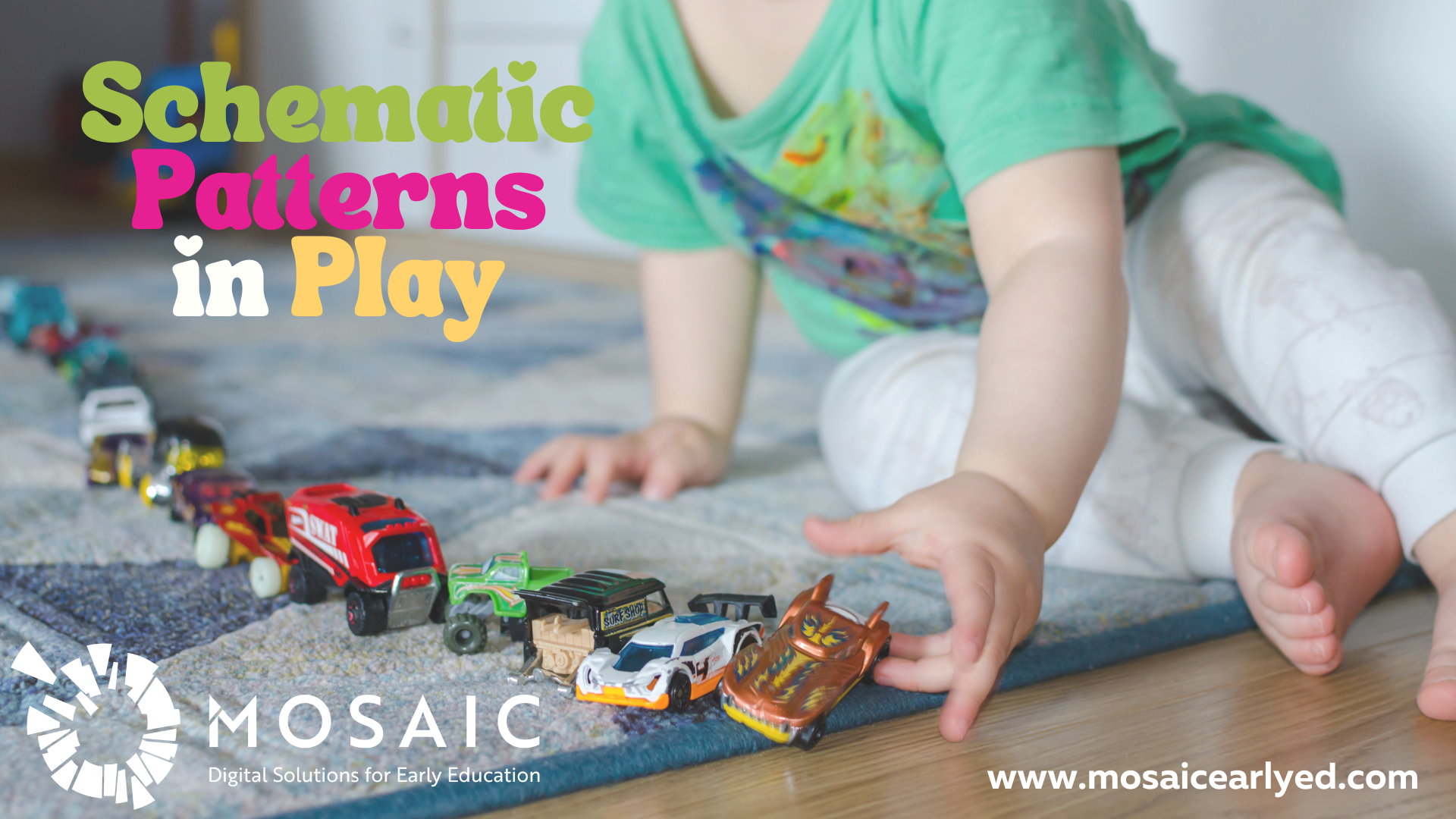
Schematic Patterns in Play (2nd ed. Mar 23)

Programme Introduction

Schematic play happens when babies, toddlers and young children are involved in repeated actions or certain behaviours as they explore the world around them and try to find out how things work. We call these specific actions or behaviours 'Schemas'

'Schematic Patterns in Play’, identifies and explains the main play schemas. Sample activities to support children to develop these further are highlighted alongside descriptive words to build corresponding language acquisition under each schema. You will also see examples of how to write a learning story with a schema focus and many images of play schemas in action. This programme will be particularly suitable for those working with children under 3 and in junior pre-school. 

The Resource Documents section contains printable handouts to support the programme content and a Certificate of Participation is saved to the educator profile on completion.

IMPORTANT* Before you start - please read 'NOTES FOR THE COURSE'. This contains important information to help you navigate the site if you are undertaking a programme for the first time. 


Programme Content

  • Building unconscious memories
  • Trajectory, Transporting, Enveloping, Positioning, Enclosing, Rotation, Orientation, Connecting.
  • Language linked to schemas
  • Schema learning stories
  • Seeing Aistear in schema play
  • Activities to support, consolidate and extend schema
Key Learning Outcomes

Key Learning Outcomes from this programme include: 

1. An awareness of the importance of schematic patterns of play in how young children think and learn

2. The ability to recognise the main schema types and how these are represented in children's play

3. Skills and awareness of how to provide activities that will support children to practice and consolidate schema play

4. An appreciation of how Aistear themes and goals are present in schematic play.

5. The ability to compile learning story observations about schema play

6. Understanding of the key role of the adult as a co-facilitator in schematic play. 
02 Hours

€25.00

Presentation with video/audio

Easy to follow components

Downloadable reference documents

Test multiple choice questions

Certificate of Completion

Notes for the course

You may also like

course-preview
Authentic Assessment through Emergent Practice (ICQAW Accredited)
Welcome to the training programme ‘Seeing Every Child’ child-led documentation for early learning! This is Module 1- Authentic Assessment through Emergent Practice The Learning Objective of the full programme (4 modules) is to introduce child-centred documentation as an instrument to recognise, support and enhance children’s wellbeing, learning and development. This is Module 1. COST: The cost of each individual module includes: The cost of your accredited certificate from ICQAW  5 components of learning and reflective tasks Anytime access - access to the programme on multiple occasions until complete Educator's Handbook with summaries, graphics, planning templates, blogs Engaging slides with audio for ease of participation.     Module 1- Authentic Assessment through Emergent Practice This module will explore the importance of seeing each child as a unique individual, with their own strengths, needs and lived experience. The programme seamlessly moves through 5 key areas and how these relate to and support strength-based, emergent practice in the areas of child and educator agency, assessment and documentation.  Components are as follows: Component 1: Emergent Practice: Placing the Child at the Centre  Component 2: Agency: Agentic Educators enable Agentic Children   Component 3: Assessment for Early Education  Component 4: Seeing the Unique Child through Documentation  Component 5: MOSAIC as a Child-centred Documentation System.   This programme is created by MOSAIC Digital Solutions for Early Education and is accredited by International Certification in Quality Assessment (ICQAWUK). An  accredited certificate is awarded on completion of each of the 4 individual modules. *PLEASE READ NOTES FOR THIS COURSE    

04 Hours

€60.00
course-preview
Planning a Child-centred Curriculum (ICQAW Accredited)
Welcome to the training programme ‘Seeing Every Child’ child-led documentation for early learning! The Learning Objective of the full programme (4 modules) is to introduce child-centred documentation as an instrument to recognise, support and enhance children’s wellbeing, learning and development. This is Module 4. COST: The cost of each individual module includes: The cost of your accredited certificate from ICQAW  7 components of learning and reflective tasks Anytime access - access to the programme on multiple occasions until complete Educator's Handbook with summaries, graphics, planning templates, blogs Engaging slides with audio for ease of participation.     This is Module 4 - Planning a Child-centred Curriculum This module is designed to support educators to streamline their curriculum planning practice through the documentation of Long-term, Medium-term and Emergent Plans.  7 individual components are contained within the module as follows: Component 1: A Reflective Cycle of Planning and Assessing Component 2: Capturing and responding to child voice (ASH) Component 3: The LT, MT and Emergent (ST) Planning Framework Component 4: Topic Scaffolds Component 5: The Emergent Plan Component 6: The Invisible Thread of linked Documentation Component 7: Emergent Planning on MOSAIC Educator This programme is created by MOSAIC Digital Solutions for Early Education and is accredited by International Certification in Quality Assessment (ICQAWUK). An  accredited certificate is awarded on completion of each of the 4 individual modules. *PLEASE READ NOTES FOR THIS COURSE  

04 Hours

€60.00
course-preview
A Suitcase Full of Stories - Book information feature
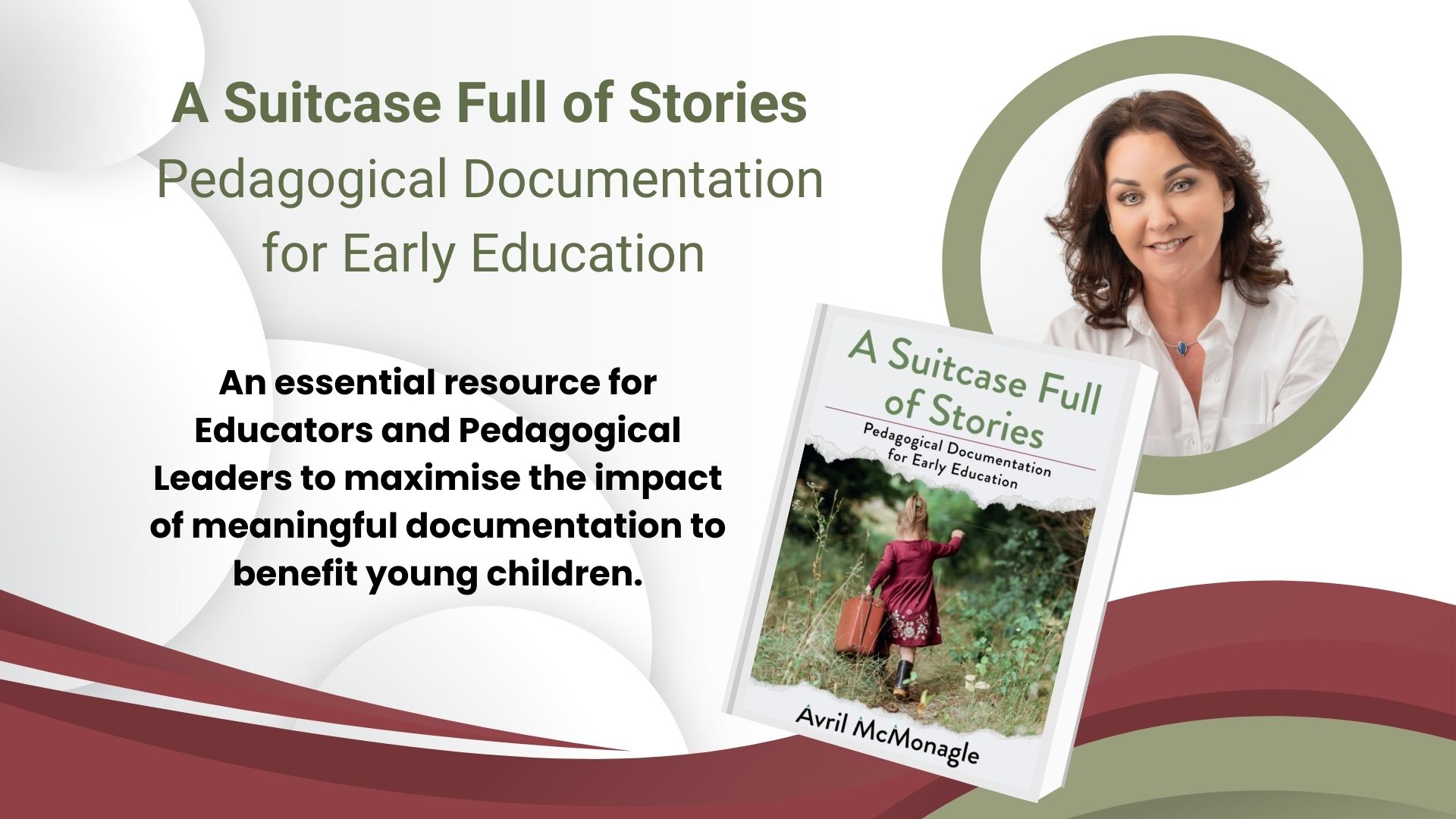
This short presentation will give you a flavour of the creative new book A Suitcase Full of Stories by Avril McMonagle on pedagogical documentation for early education.   'A Suitcase Full of Stories' is an essential resource for Educators, Pedagogical Leaders and students to maximise the impact of meaningful child-led documentation for learning using a story approach. Packed with examples of learning stories, child voice and emergent planning, this book is about capturing children’s stories. It supports educators to develop the skills to tune-in to young children, to see and hear their voice and to use this information to build meaningful learning experiences through a child-led curriculum of play. Available from Amazon.uk/com Purchase here and from the MOSAIC Website A Suitcase Full of Stories - Paperback - MOSAIC (mosaicearlyed.com) This presentation is for information purposes only.  Downloadable flyer in 'Reference Document' section.   

0.5 Hours

Free